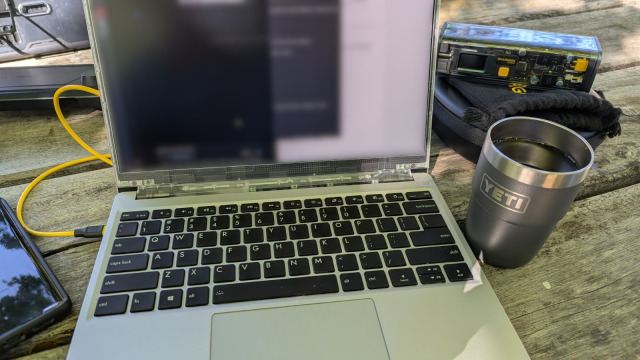
As I write this, I’m sitting in beautiful Bright, Victoria. The Christmas rush is just around the corner, but right now, the weather is absolutely perfect. The Ovens River is flowing clear, the trees are green, and the coffee is hot. It is the ideal setting for a bit of remote work before the holiday chaos truly begins.
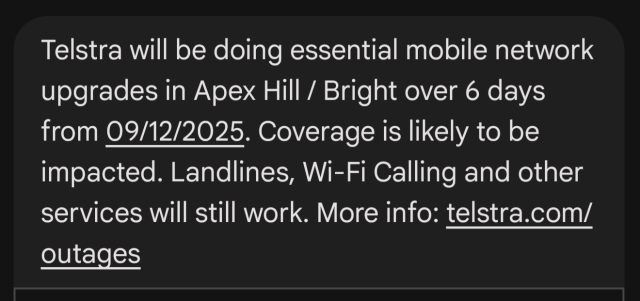
However, there is one small hitch in this idyllic picture. Telstra usually the gold standard for coverage in regional Australia has chosen this exact moment, leading right into the peak tourist season, to service the local mobile tower. Consequently, I can’t believe I’m saying this, but I am currently posting this blog using my Vodafone mobile, not my Telstra one. In fact, for most of the day, I’ve had to hotspot my Vodafone device just to get my Telstra phone online. It just all feels a bit upside-down. But this little holiday hiccup serves as the perfect backdrop for a serious reminder: if connectivity is critical for your business, you cannot rely on a single provider.
The Myth of the "Too Big to Fail" Provider
We often fall into the trap of thinking that if we sign up with the biggest player in the market (like the "Big T") we are immune to outages. While it is true that major carriers generally offer superior coverage and uptime, they are not invincible. Whether it is scheduled maintenance (like what I’m experiencing here in Bright), a backhoe digging up a fibre line in the city, or a network-wide routing error, outages happen. If your business runs solely on one connection, you are effectively putting the keys to your shop in someone else’s pocket. For an Australian SMB, downtime means:
- Lost Revenue: EFTPOS terminals stop working.
- Productivity Dips: Cloud-based CRM and accounting software become inaccessible.
- Reputation Damage: Frustrated clients who can’t reach you. The situation I faced today - manually switching hotspots to stay online - is a minor annoyance for a holidaymaker. But for a business owner with staff to manage and customers to serve, manual switching isn't a strategy; it's a panic response.
True Redundancy vs. True Diversity
In the networking world, we talk a lot about "redundancy," but often businesses confuse this with "diversity." It is important to distinguish between the two if you want a truly bulletproof network. Redundancy might look like having two NBN connections. However, if both of those connections come into your building via the same trench in the street, a single accident during roadworks can sever both. You have redundancy, but you share a single point of failure. Diversity, on the other hand, is about varying the method of delivery. This is what saved me today.
- Carrier Diversity: Using Telstra and Vodafone (or Optus). If one network has a tower issue, the other is likely still operational.
- Medium Diversity: Combining a fixed line (NBN or Fibre) with a wireless backup (4G/5G or Satellite). By mixing these technologies, you ensure that physical damage to a cable doesn't impact your wireless backup, and a tower maintenance issue doesn't impact your wired line.
 Screenshot on the left = Vodafone. Screenshot on the right = Telstra. Note the difference in coverage
The Role of Starlink and The "Work From Anywhere" Reality

Today's connectivity landscape has changed dramatically with the introduction of Low Earth Orbit (LEO) satellites like Starlink. When I am highly remote - think deep bush or far from the nearest town - I run a Starlink Mini. It is a game-changer for maintaining business continuity in dead zones. However, when I am under heavy tree canopy or closer to a township, like I am today in Bright, I switch back to cellular connectivity.
As an aside, the Starlink Mini doubles as my primary backup for my home office. I'll make a post about how I do this sometime soon.
This approach - selecting the right tool for the environment - is exactly how we design secure networks for businesses. We don't just plug in a router and hope for the best. We look at your location and ask:
- What is the primary connection? (e.g., Business Fibre)
- What is the secondary failover? (e.g., 5G or Starlink)
- How do we make the switch seamless?
This is where technologies like SD-WAN (Software-Defined Wide Area Network) come into play. In plain English, SD-WAN acts like a smart traffic cop for your internet. It constantly monitors your connections. If the "Big T" drops out, the traffic cop instantly blows the whistle and redirects all your business traffic to the backup link (like Vodafone or Starlink) without you even noticing. No manual hotspotting required.
Preparing Your Business for the "Christmas Rush"
As we head into the end-of-year period, network congestion increases, and the risk of outages can rise with summer storms and heat affecting infrastructure. Take a moment to audit your current setup. If you unplugged your main internet cable right now, what would happen?
- Would your phones stop ringing?
- Would your team be sent home?
- Would your online POS stop working?
- Or would your system seamlessly flip to a backup, allowing you to keep trading?
My experience in Bright was a gentle reminder that relying on a single path is a gamble. Thankfully, for me (as someone working while on holiday) it just meant toggling a setting on my phone. For your business, the stakes are much higher.
Getting some diversity
The view here in Bright is spectacular, and despite the tech hiccups, I’m grateful to be here. But I’m also grateful for the diversified connectivity that allowed me to stay online when the primary provider went dark. Don’t wait for the internet to go down during your busiest period to realise you need a Plan B. Whether it’s integrating 5G failover, setting up Starlink for remote sites, or designing a robust SD-WAN solution, diversity is the key to resilience. Is your business relying on a single point of failure? Contact AFSecure today for a complimentary network review. Let’s ensure you stay connected, no matter what the holiday season throws at you.