
If 2026 has shown us anything, it's that every time something sounds like the plot of a "direct to DVD" movie (or I guess direct to streaming now) - it could be reality. Today's plot revolves around a date, the 1st of March 2027. It's a date that has cybersecurity folk (such as myself) nervously watching.
Before I get on with today's blog post, Let me explain what's going on.
Far far away from Australia, the FCC (Federal Communications Commission) in the United States made a ruling, and it's a doozy:
- The Ruling: On the 23rd March, 2026, the FCC added "all consumer-grade routers produced in foreign countries" to its Covered List > essentially a blacklist of equipment deemed a national security threat. (Emphasis on ALL)
- The reasoning: So this follows some high-profile state-sponsored attacks (like Volt Typhoon) where foreign-made routers were compromised to infiltrate critical infrastructure. If you're not aware of what I'm talking about, search up Volt Typhoon, Salt Typhoon and Flax Typhoon. They all make for fascinating reading.
- The Deadline: While existing routers aren't banned from use, the FCC has granted a limited waiver for security updates that expires on 1st March, 2027. Remember this date.
- The Impact: After this date, unless the waiver is extended, millions of routers from practically every brand you know, the vast majority of which are manufactured overseas - they will stop receiving security patches. They won't "turn off," but they will become "zombies" - functional but permanently vulnerable to every new exploit discovered after this date.
This has been well covered by tech and even legal outlets in the US. More reading here, here, here and here if you're interested.
So back to our movie plot...
It’s 2:00 AM on 1st March 2027. Most small business owners are fast asleep, but in the digital world, a silent timer just hit zero. For millions of network routers across the globe, the "update" light has just gone out for the last time.
OK, I'll never get hired to pen a movie - but this isn't Hollywood; it's a regulatory reality unfolding in the United States right now, that is set to send shockwaves all the way to our shores here in Australia. The FCC's ruling has effectively placed an "expiry date" on the security of millions of routers manufactured overseas (and I'll say it again, that's almost all of them). By early 2027, a massive chunk of the world’s networking hardware could be left without its most critical shield: security patches.
We still don't know exactly how this will play out, but today we’re going to look at what happens when half the world’s hardware effectively "goes dark" from a security perspective, and what you can do to ensure your business stays in the light.
 State-sponsored actors (groups like "Volt Typhoon") have been caught using the tiny security gaps in everyday office and home routers to tunnel into critical infrastructure, like power grids and water systems.
To address this, the FCC has insisted that routers - even home user routers - in the US need to be manufactured in trusted locations. To keep the peace while manufacturers scramble and move production to more "trusted" locations, the FCC granted a waiver allowing these devices to continue receiving firmware updates and security patches. But there’s a catch: that waiver currently expires on 1st March 2027. What happens when we reach this cliff?
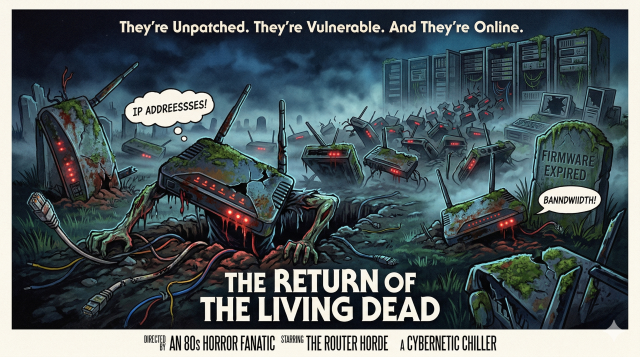 The problem with the FCC's approach is that when a router stops receiving patches, it doesn't stop working. It still lets you browse the web and send emails. But it becomes what we call "legacy" hardware - a digital antique. Every time a new vulnerability is discovered by hackers, your router will have no way to fix it. Over time, these devices become "zombies" - easy targets for botnets that can use your internet connection to launch attacks on others, or worse, as a backdoor into your private business data.
This 1st March 2027 deadline feels like a huge "own goal" given what the FCC's trying to achieve here. In its current form it will make the "vulnerable router" problem worse - not better.
 Just as it feels like we're staring down a dystopia fueled by fuel shortages you must be reading this and thinking: "That’s a US regulation, why does it matter to my business in Melbourne?"
The reality of modern technology is that we live in a global supply chain. Most of the hardware sitting on the shelves of your local electronics store in Australia is the exact same hardware sold in the US. When a manufacturer like TP-Link or ASUS is forced to stop supporting a specific model in the American market due to FCC restrictions, the economic incentive to keep developing patches for that same model in Australia drops significantly.
If the US market (the largest consumer of this tech) is cut off from updates, we can expect the global firmware pipeline for those devices to dry up shortly after. We share the same vulnerabilities, the same software, and the same risks. If the US network ecosystem becomes a "patchwork quilt" of unpatched devices, Australia becomes a prime target for lateral attacks. A compromised router in a consultant's office in Brunswick can be used as a hopping point to attack a corporate partner in San Francisco. In the eyes of a cyber-criminal, national borders don't exist: they only see IP addresses, they only see protected vs. unprotected targets.
 So how do you plot a path through this darkness?
If you’re running your business on a consumer-grade router you picked up for a couple of hundred dollars a few years ago, it’s time for a proactive audit. Here is how we recommend our clients prepare for the 2027 shift:
So how do you plot a path through this darkness?
If you’re running your business on a consumer-grade router you picked up for a couple of hundred dollars a few years ago, it’s time for a proactive audit. Here is how we recommend our clients prepare for the 2027 shift:
- Audit Your Hardware: Check the make and model of every router and access point in your network, including those used by staff working from home. If it’s a consumer-grade brand manufactured in a "foreign" jurisdiction (like China), it’s likely on the list.
- The "Prosumer" Trap: Many small businesses use "high-end" consumer gear, thinking it offers business-grade protection. The FCC's ruling makes no distinction - if it’s classified as consumer-grade, it’s affected.
- Plan Your Lifecycle: Don’t wait until February 2027 to start shopping. Supply chains for "approved" hardware are likely to tighten as everyone rushes to replace their gear at the same time. Start a rolling replacement programme now.
- Move to Managed Security: This is the perfect opportunity to move away from "set and forget" hardware and towards a managed network solution where security updates are guaranteed and monitored by experts.
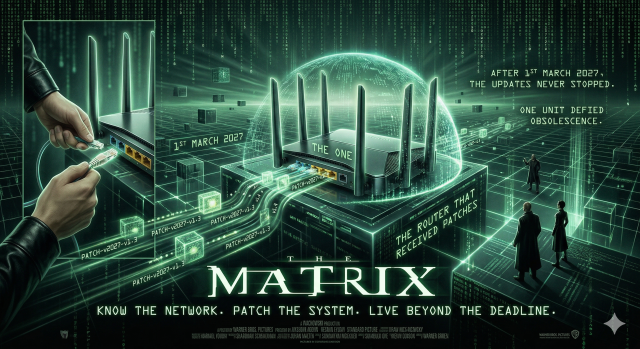 My original draft for this blog post, included a list of "secure brands". But frankly, if you were to ask me who will be "The One" to get this right - I couldn't say right now. No one could.
My best guess is as follows:
My original draft for this blog post, included a list of "secure brands". But frankly, if you were to ask me who will be "The One" to get this right - I couldn't say right now. No one could.
My best guess is as follows:
- Some existing big-enterprise manufacturers (think Cisco, Fortinet, etc..) use their existing diversified supply chains and act like nothing has changed. Remember this FCC ruling may be new for consumers, but it already exists for government where players like this already play.
- Players with too big a scale to give up the US market or who take security super seriously will produce "US editions" of their hardware, at higher cost but compliant with the new law (think Ubiquiti, Netgear and yes, even TP-Link)
- Smaller players may exit the US Market entirely, stand up some form of small batch manufacturing in the US or just become grey-market specials. It's too hard to guess right now.
 The 2027 deadline isn't a reason to panic. You're not plowing full steam ahead into an iceberg.
What this deadline does signal clearly however, is that the era of "cheap and cheerful" networking is coming to an end for businesses that value their security.
The 2027 deadline isn't a reason to panic. You're not plowing full steam ahead into an iceberg.
What this deadline does signal clearly however, is that the era of "cheap and cheerful" networking is coming to an end for businesses that value their security.
In fairness, the inadequacy of these solutions isn't new. It was one of the drivers behind building this business.
By making a move toward professional, well-supported hardware today, you aren't just complying with a future regulation - you're building a more resilient foundation for your business to grow.
At AFSecure, we specialise in helping Australian businesses navigate these technical transitions without the headache. Whether you need a full network redesign or just a quick audit to see if your current gear could be a zombie 12 months from now, we’re here to help.